
Breaking the Gas-Electricity Link: The UK Government's Energy Pricing Reform
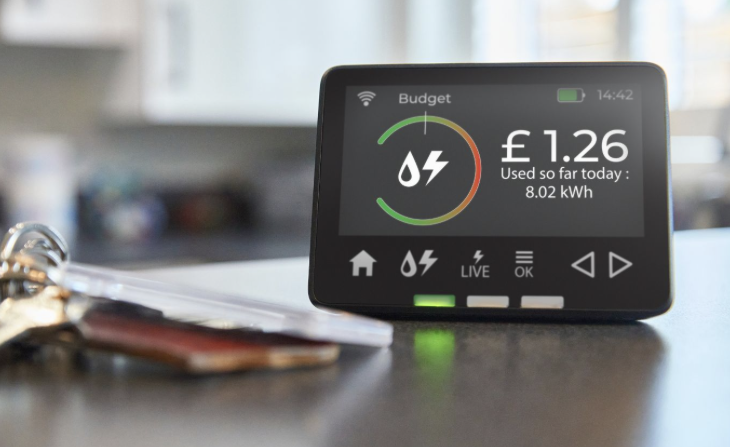
Credit: Bituo Technik
DESNZ announces landmark decoupling measures, what it means for transition risk, ESG disclosure, and the capital strategy for clean energy.
Context:
The UK government announced a series of landmark measures designed to break the structural link between volatile global gas prices and UK electricity bills. The announcement, made jointly by Prime Minister Keir Starmer, Chancellor Rachel Reeves, and Energy Secretary Ed Miliband, was framed explicitly as a response to two fossil fuel price shocks in less than five years: first, Russia's invasion of Ukraine, and now the energy price spike triggered by the conflict in the Middle East.
For ESG practitioners, sustainable finance specialists, and legal and compliance professionals, the announcement is significant on multiple levels. It is not simply a consumer protection measure. It is a structural shift in how the UK prices clean energy with profound consequences for transition risk assessment, green finance, utility sector credit analysis, and the long-term viability of the UK's net-zero capital strategy.
What Was Announced and Why It Matters:
Britain has already made considerable progress on the structural problem. In the early 2020s, gas set the wholesale price of electricity approximately 90% of the time, the consequence of marginal pricing, where the most expensive generation source needed to meet demand sets the price for all generation. Today, that figure stands at around 60%. The government's clean energy mission is projected to reduce it to approximately 50% by 2030.
But 30% of Britain's power supply remains exposed to wholesale prices set by gas. When gas prices spike, as they have since the Iran conflict, these generators earn windfall revenues while households pay elevated bills. The government's announcement targets this exposed 30% through two principal measures.
Alongside the core pricing measures, the government announced a raft of complementary clean energy acceleration measures: a £9,000 Boiler Upgrade Scheme grant increase for oil and LPG-heated properties; £100 million additional Social Housing Fund investment for solar installations; solar panels for 100 more schools and colleges through Great British Energy; planning and grid connection reforms to unlock up to 10 GW from public land; EV charging, heat pump, and solar permitted development rights changes; £90 million for UK heat pump manufacturing; and a Reformed National Pricing Delivery Plan projecting up to £20 billion in system benefits by 2050.
The ESG Lens: Transition Risk is Being Re-Priced
From an ESG regulatory perspective, the announcement has two distinct dimensions that practitioners need to understand.
First, it is a live demonstration of transition risk materialising. The marginal pricing mechanism, which links clean energy revenues to gas prices, has long been identified in transition risk frameworks as a structural vulnerability of the UK's electricity market. NGFS scenario analysis, the PRA's climate stress testing expectations (SS5/25), and the Bank of England's Climate Biennial Exploratory Scenario all model scenarios in which energy policy change creates sudden, material repricing in utility sector revenues. This announcement is that repricing is happening in real time.
For financial institutions with credit or equity exposure to UK renewable energy generators, particularly those on Renewables Obligation support not yet on fixed CfDs, the WCfD proposal requires careful analysis. Generators that transition to WCfDs will exchange upside gas price exposure for fixed-price certainty. This changes their financial profile: lower volatility, lower tail-risk upside, more bond-like cash flow characteristics. Credit analysts should be modelling this transition for all portfolio holdings in the affected generator segment.
Second, the announcement accelerates the structural de-risking of UK clean energy investment for the long term. The WCfD mechanism, if executed effectively, will further reduce the correlation between UK electricity prices and gas market volatility. This improves the investment case for clean energy infrastructure from a risk-adjusted return perspective: lower revenue volatility, more predictable cash flows, and reduced basis risk for institutional investors financing the transition.
Next Steps:
Update transition risk scenario analysis: Incorporate the WCfD proposal and EGL increase into ISSB S2, TCFD, and PRA SS5/25-aligned climate scenario analysis for UK energy sector exposures. The 'orderly transition' scenario should reflect the government's stated 2030 trajectory.
Assess green bond and sustainable finance instrument implications: Review green bond frameworks, sustainability-linked loan terms, and SDR/SFDR product labelling for UK energy sector holdings against the changed regulatory and revenue environment.
Engage with the forthcoming WCfD consultation: The government has committed to consulting on WCfD design later in 2026, with an allocation process planned for 2027. Developers, generators, and investors in UK clean energy should engage proactively to shape the contract design and valuation methodology.
Brief boards and investment committees: The announcement is a material ESG policy development. Boards, investment committees, and risk committees with UK energy exposure should be briefed on the transition risk implications and the investment opportunity the WCfD mechanism creates for long-term capital deployment.
Source | BBC & The Guardian
