
CGFI Spatial Finance Initiative: Global Ethylene Production and the Carbon Lock-In Risk for Financial Institutions
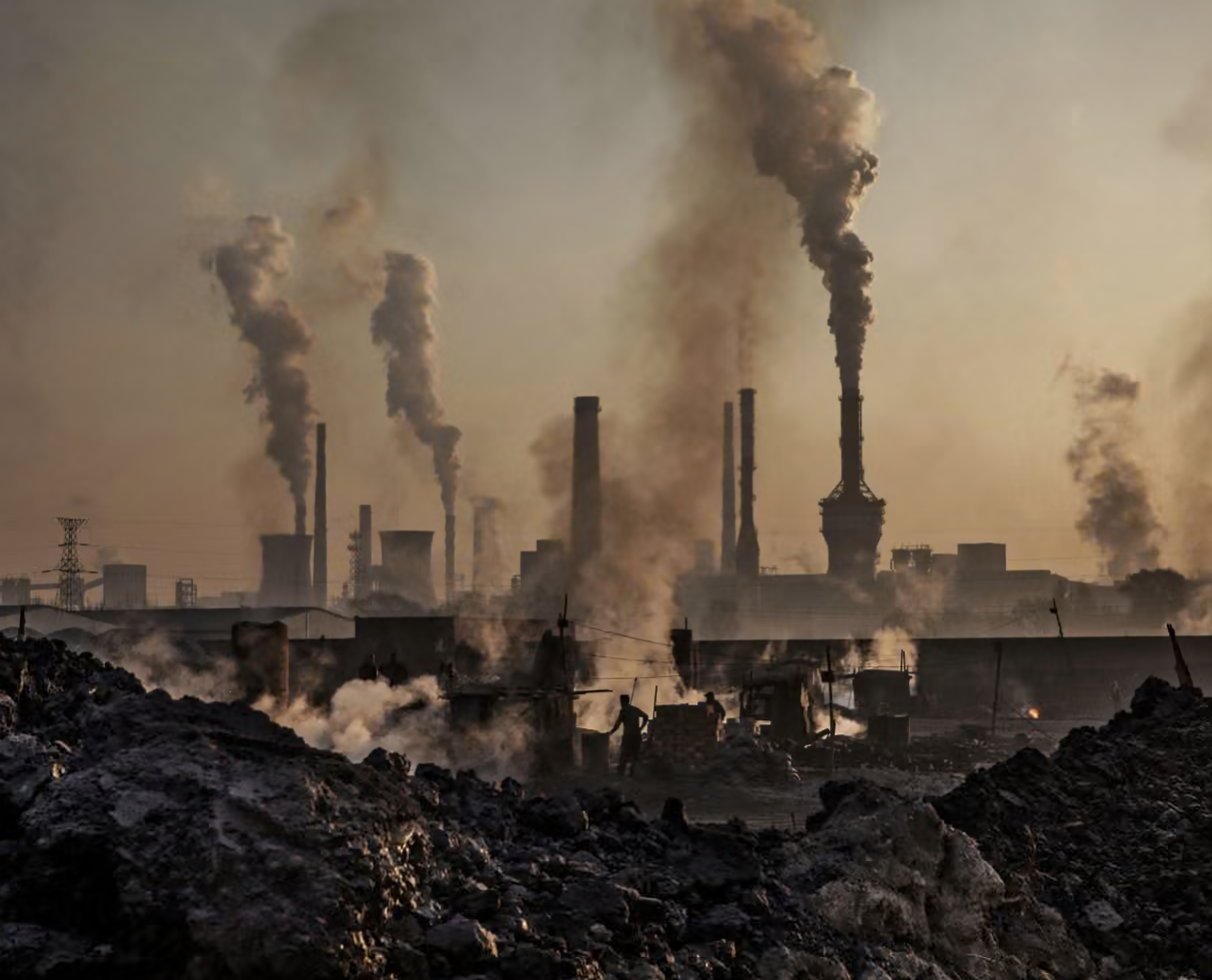
Credit: The Guardian
Asset-level data on 303 ethylene facilities worldwide reveals the scale of carbon lock-in risk in one of the world's most emissions-intensive industrial sectors and why it matters to banks and investors.
Context:
The UK Centre for Greening Finance and Investment (CGFI), established by UKRI via the Natural Environment Research Council and Innovate UK in 2021, operates the Spatial Finance Initiative, which produces open, global, asset-level datasets for high-impact industries. Following datasets for cement, steel, pulp and paper, and waste management, the Initiative published the Global Ethylene Production Database. A comprehensive dataset covering 303 operating and announced ethylene-producing facilities worldwide, with information on location, operating status, capacity, plant type, start year, feedstock, expansion project costs, and ownership.
The publication is significant because ethylene is the world's most-produced organic chemical, with global production responsible for almost 13% of the petrochemical industry's CO2 emissions. Steam cracking, the dominant production method, is an energy-intensive process generating approximately 1.2 tonnes of CO2 per tonne of ethylene produced. With global ethylene demand projected to grow and existing infrastructure built on decades of fossil fuel feedstock, the sector represents a classic carbon lock-in problem: substantial capital has been invested in long-lived, high-emission assets that are costly to retire and difficult to rapidly decarbonise.
The CGFI's work sits at the intersection of climate science and finance. The asset-level dataset enables financial institutions, banks, asset managers, insurers, and credit rating agencies. To assess their exposure to ethylene sector transition risk at the facility and portfolio level, rather than relying on company-level aggregates that obscure the actual physical and operational characteristics of individual assets.
Rules and Guidelines:
The Spatial Finance Initiative's methodology provides financial institutions with the analytical tools to translate asset-level physical data into financial risk metrics. For ethylene facilities specifically, the key risk dimensions are: transition risk, assets reliant on fossil fuel feedstocks (naphtha, ethane) face significant carbon pricing exposure as carbon border adjustment mechanisms (CBAM, EU ETS) expand their scope to petrochemicals; physical risk, coastal and river-adjacent ethylene cracker facilities face flood, storm surge, and water stress risks under climate change scenarios; and stranded asset risk, facilities with long remaining asset lives (30+ years) built around fossil fuel feedstocks represent potential stranded assets if carbon prices rise to levels needed to meet Paris Agreement targets.
The database is complemented by CGFI's additional data on base chemical production facilities (including ammonia, benzene, butadiene, methanol, propylene, and toluene/xylene) in Europe and North America, enabling regional portfolio risk assessment. The Initiative's analytical framework aligns with the ISSB S2 requirements for physical and transition risk assessment, the TCFD implementation guidance, and PRA SS5/25 expectations on climate-related financial risk management.
Businesses Affected:
Banks and credit institutions with lending exposure to petrochemical companies, ethylene producers, or LNG and naphtha feedstock suppliers, who need asset-level data to assess transition and stranded asset risk in their credit portfolios.
Asset managers and institutional investors with equity or bond exposure to petrochemical sector companies, who need to go beyond company-level sustainability reporting to understand facility-level climate risk.
Insurance companies underwrite property and business interruption risk for ethylene crackers and associated infrastructure, which need physical risk assessment at the asset level.
Credit rating agencies and ESG data providers are incorporating climate, physical and transition risk into issuer ratings and scores.
Next Steps:
Access the CGFI Global Ethylene Production Database (open access) and map your firm's credit or investment exposures to specific facilities in the dataset. Assess the operating status, feedstock type, and ownership structure of the highest-risk facilities in your portfolio.
Integrate asset-level ethylene sector data into ISSB S2-aligned transition risk scenario analysis. The facility-level carbon intensity data enables meaningful portfolio-level scenario testing against 1.5°C and 2°C transition pathways.
Review the lending and investment policy for the petrochemical sector exposure. The CGFI data provides the empirical basis for informed sectoral transition risk assessments that go beyond generic sector classifications.
Engage with CGFI's Innovation Hubs and research programme for access to custom analytical tools built on the open dataset, including spatial overlay with physical climate risk layers.
Source | CGFI | Global Ethylene Production Database
